

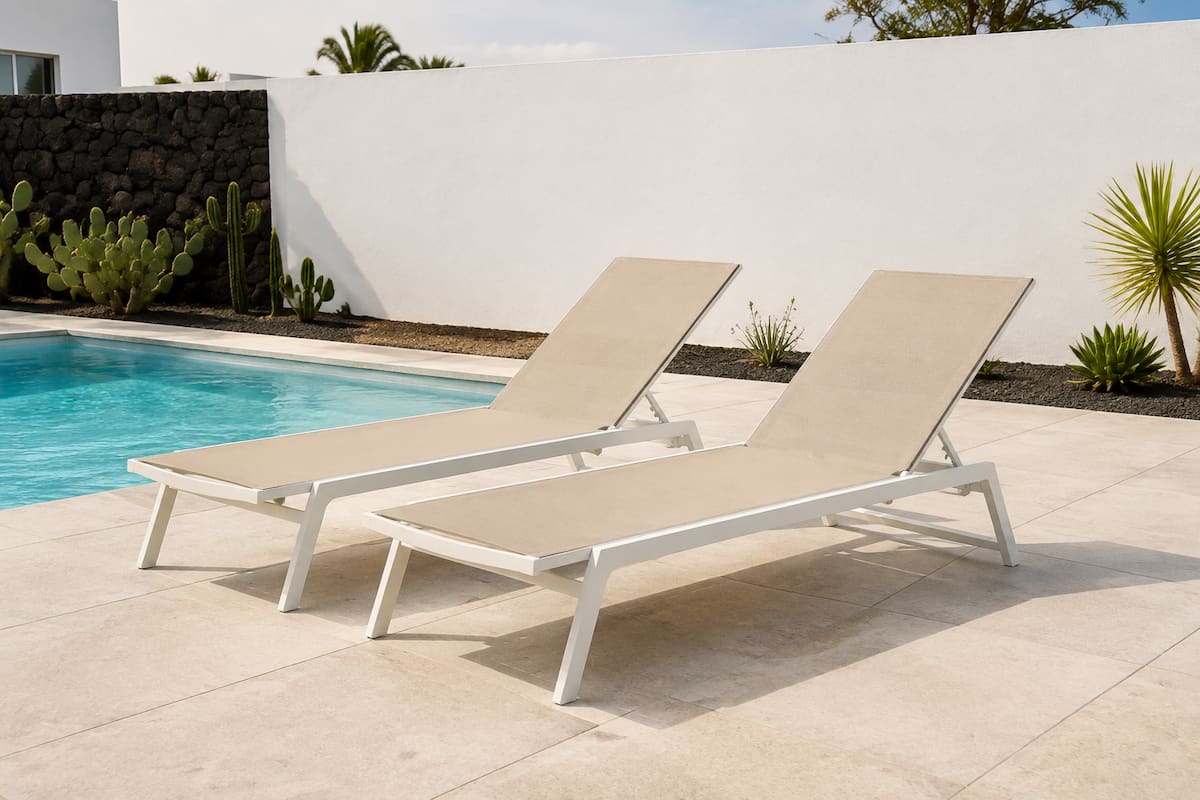
Garden sun loungers are one of the essential pieces of furniture for enjoying the outdoors, whether you’re relaxing, reading or sunbathing. However, the wide variety of designs, materials and features available can make it difficult to choose.
There are fixed, reclining, folding and wheeled sun loungers, as well as hanging or freestanding hammocks, in addition to other designs specifically tailored to certain situations. Therefore, to choose the right sun lounger for you, it’s worth familiarising yourself with the different models available on the market and the features each one offers.
In this guide, we review the main types of sun loungers and explain which one is best suited to each garden, terrace, swimming pool or relaxation area, depending on your needs.
Firstly, it is worth familiarising yourself with the different types of sun loungers and deckchairs available, based on their design, shape and features, as these factors determine how each model is used, where it is best suited and what level of comfort it offers.
Fixed sun loungers are those that rest directly on the ground via a rigid frame that does not fold away or change position. They provide a stable and sturdy base, suitable for spaces where the furniture is permanently installed, such as by the poolside or in a large garden.
They are therefore a practical option for those who prioritise durability and do not need to move the furniture frequently; however, they take up more storage space and are more difficult to transport and reposition.
This type of sun lounger allows the angle of the backrest to be adjusted to various positions to adapt your posture to different activities. In this way, they can be used for sitting, reading, chatting, sunbathing or even lying flat, provided they can be adjusted to a sufficiently horizontal position.
Thanks to this versatility, they are one of the most popular choices for both domestic use and hospitality venues.
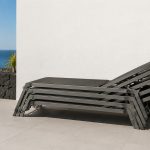
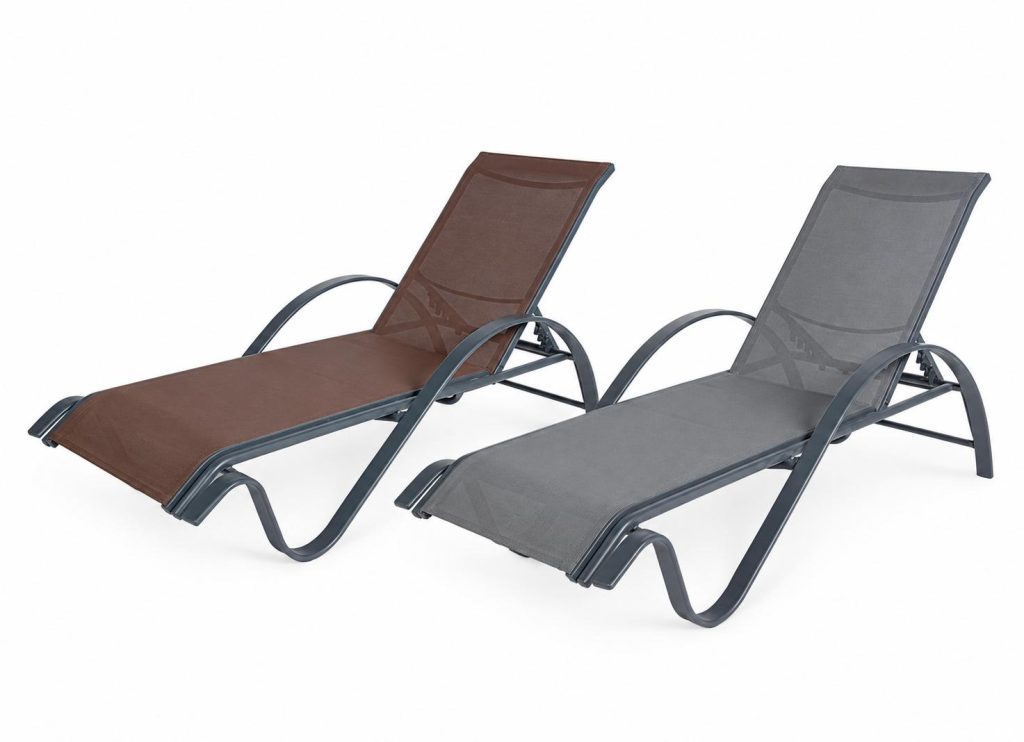
Stackable sun loungers, on the other hand, are designed to be stacked on top of one another, reducing the space they take up when not in use. For this reason, they are often the preferred choice for communal swimming pools, hotels and other shared spaces, where sun loungers need to be stored in a small area. They are also very useful on private terraces with limited storage space.
However, before choosing this type of sun lounger, it is advisable to check how many can be stacked and whether their weight allows them to be handled safely.
In this case, the sun loungers feature small wheels at one end of the frame to make it easier to move them without having to lift them completely off the ground. They are therefore very useful when you need to frequently adjust their position in relation to the sun, move them closer to the pool or put them away when not in use.
They work best on smooth, firm surfaces without significant unevenness that might hinder the wheels from rolling.
Folding sun loungers are models featuring a hinged frame that allows them to be folded up, reducing their size for easier transport and storage. They are therefore a practical solution for small balconies, holiday homes or even for taking to the beach or a campsite.
However, they tend to be less durable in the long term than other types of sun loungers, as the hinges and folding mechanism can wear out with use.
A more distinctive design is the double sun lounger, which offers a wider surface area for two people to relax on or for greater freedom of movement. In addition, outdoor loungers often feature padded mats or even mattresses, separate backrests, covers or canopies.
They are ideal for chill-out areas and more exclusive spaces, but require a fair amount of space, a level surface and fabrics designed to withstand the sun, humidity and continuous outdoor use.
As for the different types of hammock, the most common is the hanging hammock, which consists of a flexible fabric or rope surface suspended between two sturdy anchor points, such as trees, posts or wall-mounted brackets.
This option moulds to the body and provides a gentle rocking motion, but requires sufficient distance between the anchor points and an installation capable of safely supporting the expected weight. Furthermore, it does not offer as stable a support as a sun lounger, so it is not always suitable for everyone’s tastes.
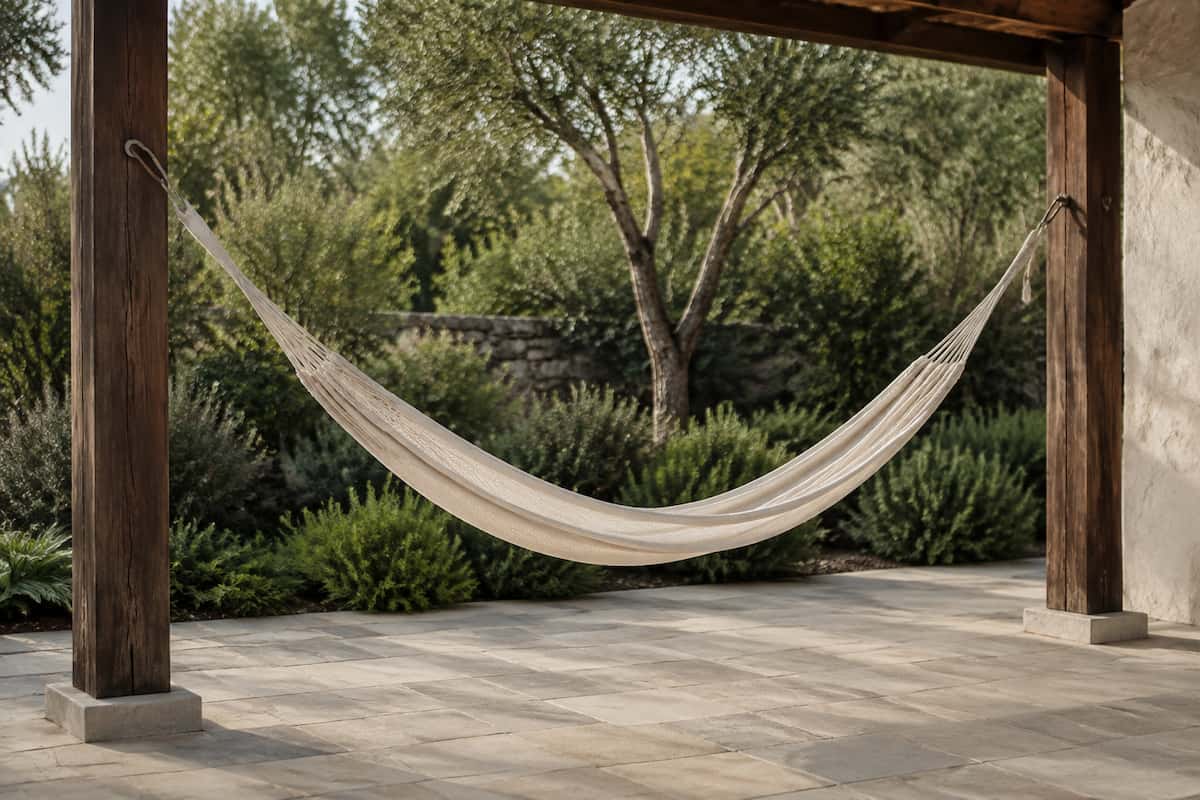
In contrast, freestanding hammocks feature their own supporting structure – usually made of wood or metal – from which the resting surface is suspended. Consequently, this type of hammock does not require external anchor points and can be placed where there are no trees, walls or other supports, as well as being moved to a different location when necessary.
Although they are much more versatile than hanging hammocks, they also take up more space, so you’ll need to measure your garden or terrace beforehand.
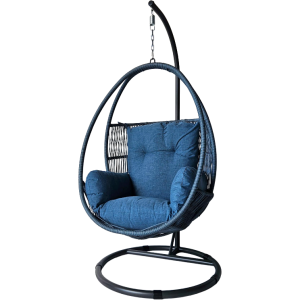
Finally, hammock chairs are suspended from a single point and allow you to relax in a seated or slightly reclined position. As they take up less floor space than a horizontal hammock or sun lounger, they are ideal for small balconies and porches where a traditional sun lounger would not fit.
It should be noted, however, that installing them requires checking the strength of the ceiling, beam or support structure to ensure they can be hung safely. Furthermore, as they do not allow you to lie completely flat, their function is closer to that of an armchair than a sun lounger.
As well as considering the design, we can also find different models of deckchairs and sun loungers based on the materials they are made from. In fact, materials are particularly important for outdoor use, where furniture is more exposed to the sun, damp and wind, and can deteriorate easily if the material is not suitable.
Aluminium is one of the most commonly used materials for sun loungers thanks to its lightness, resistance to corrosion and ease of maintenance. As it does not rust, it withstands damp and prolonged exposure to the sun very well, making it a highly durable as well as economical option.
Aluminium sun loungers are usually combined with textilene or padded mats on the seating surface for greater comfort.
An alternative to aluminium sun loungers is steel, which also provides a sturdy frame capable of withstanding heavy use. However, it is heavier than aluminium and, for outdoor use, must have adequate protection against corrosion.
Should the coating become scratched or damaged, it is advisable to repair the area as soon as possible to prevent surface rust from forming.
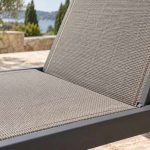
Textilene is a technical, breathable and water-resistant fabric commonly used for the seat and backrest of sun loungers, usually mounted on aluminium frames.
This synthetic fabric is typically made from PVC-coated polyester fibres and is flexible, washable and moisture-resistant, meaning it can be used without a mat. Furthermore, the main advantage of textilene sun loungers is that they dry quickly after getting wet and do not retain excessive heat, thus providing extra comfort on the hottest days.
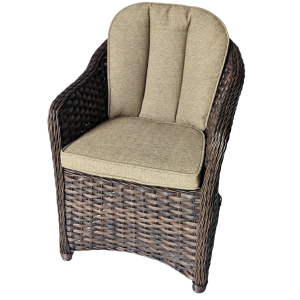
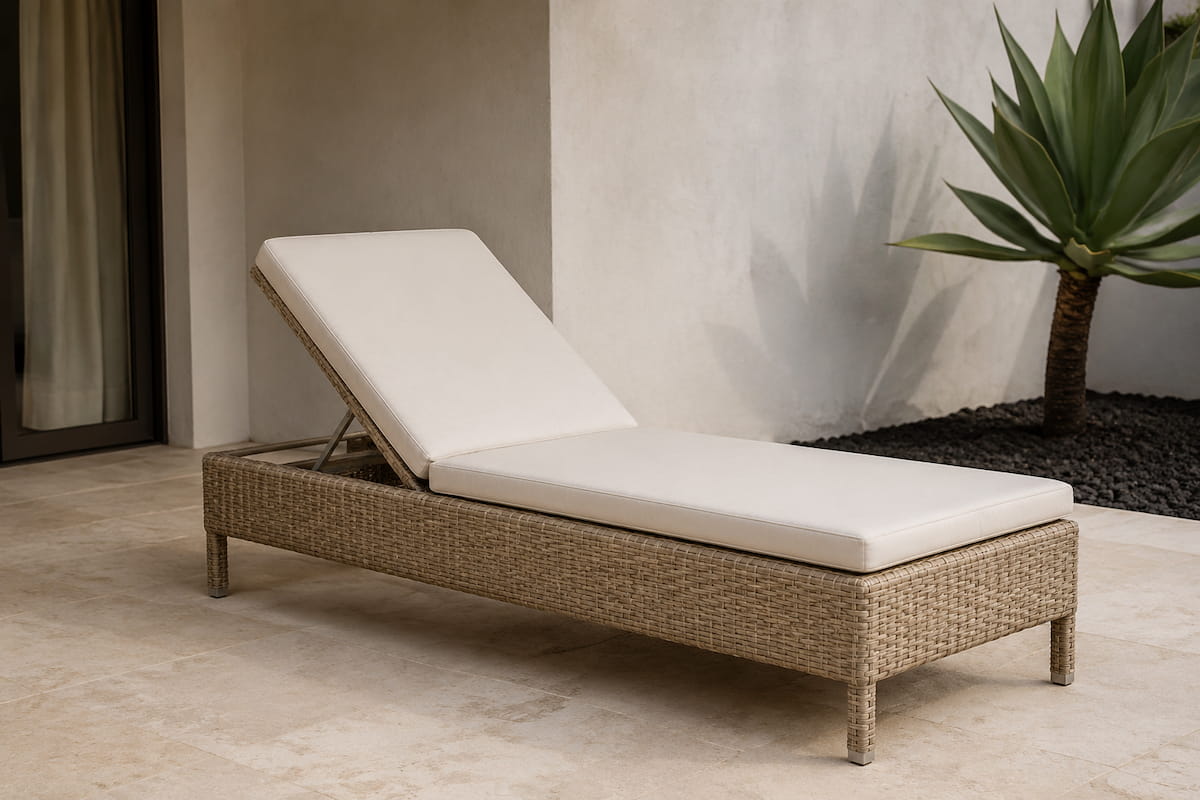
Synthetic rattan mimics the appearance of natural rattan but offers much greater resistance to moisture, sunlight and pests. In fact, it is a very popular choice due to its durability and its warm, elegant appearance, which blends in well with both gardens and terraces with a natural look.
It is most commonly woven onto metal frames and paired with cushions in the seating area for added comfort.
Plastic or resin sun loungers are lightweight, washable and moisture-resistant, but they stand out above all for their more affordable price. It should be noted, however, that there are many types of plastic and it is advisable to choose one suitable for outdoor use, such as polypropylene, as poor quality plastic may warp or fade with use.
Although wooden sun loungers offer a natural look and a sturdy structure, which suits terraces, porches and gardens well, wood is a material that is highly sensitive to outdoor conditions. Therefore, before choosing a wooden sun lounger, you should ensure it has been treated to withstand the elements, and you should regularly apply varnish or the product recommended by the manufacturer.
It is also advisable to clean the surface and joints frequently to prevent the material from being affected by damp and mould.
When it comes to hammocks, the choice of fabric affects the feel, durability and ease of movement. Cotton is soft and breathable, whilst polyester or nylon cope better with damp and dry out more quickly. Rope hammocks, on the other hand, provide good ventilation, although they can be slightly less comfortable and may leave marks on the skin.
Now that we’ve looked at the main types of sun loungers for the garden and terrace, we’d like to help you choose the most suitable one for each situation. The best option will depend on where you’re going to place the sun lounger and what you’ll be using it for.
Below, we’ve set out some recommendations based on the most common situations.
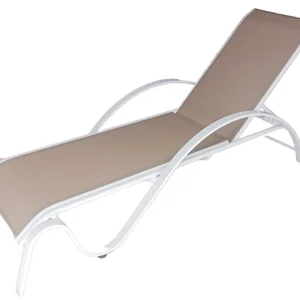

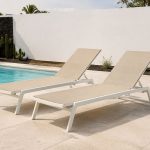
If you want to place one or more sun loungers by the pool, it’s best to opt for models that are moisture-resistant and easy to clean, such as those made of aluminium and textilene or plastic. It’s best to avoid fabrics that absorb water and to check that the legs provide sufficient stability on wet surfaces.
When space is limited, it’s best to prioritise stackable or foldable models that you can easily store away after use, with lightweight frames such as aluminium, which help to avoid visually overwhelming the space. A hammock chair also takes up little floor space, although it requires a sturdy suspension point.
In any case, before buying, it’s important to measure the furniture when unfolded and allow enough space to move around comfortably.
If you have two large trees, posts or wall-mounted anchors fitted correctly, you can install a hanging hammock to make the most of the space without taking up any floor space. Although hammocks provide a pleasant rocking sensation, it’s a good idea to try them out first to make sure they’re really what you’re looking for, as they don’t offer as much stability as sun loungers.
In this case, the best option is a reclining or multi-position sun lounger, which allows you to raise your upper body to read comfortably and lower the backrest when you want to sunbathe. Choosing a model with armrests can also be a good idea, as they offer more support and comfort and even allow you to rest your book on them whilst you’re relaxing.
It’s also worth considering the orientation and adding a parasol nearby for shade.
When the aim is to relax completely or even have a nap, there are several options depending on your preferences. One of the best is sun loungers with double textilene padding or polyester mats, which offer a thick, comfortable surface.
Other alternatives include hanging hammocks – for a better fit to the body – or outdoor beds, if you have enough space in the garden.
If you want to take your sun lounger away from home, the most practical options are folding sun loungers, as they are more compact and lightweight. However, you must ensure they are sturdy enough to withstand frequent use and can cope well with coastal conditions, such as sand, salt spray and direct sunlight.
In the case of hotels, holiday apartments and communal swimming pools, sun loungers are needed that can withstand heavy use and are easy to clean and rearrange. In this regard, stackable models simplify storage, whilst castors make moving them around quicker and easier.
At Home Zentrum, we specialise in outdoor furniture for the hospitality sector and offer models specifically designed to withstand the high footfall typical of these establishments, whilst maintaining the aesthetics and comfort required by guests.