Keeping your pillows clean is essential for ensuring a good night’s sleep and maintaining proper bedroom hygiene. However, not all types of pillow are washed in the same way, as each material requires different care to preserve its properties.
That’s why, in this post, we’ll tell you how to wash pillows depending on their materials, explaining how often you should wash them and giving you a series of tips to keep them in perfect condition.
Why is it important to wash pillows?
In many cases, pillows tend to be overlooked in the household cleaning routine. However, washing them regularly is important for maintaining good hygiene and looking after both your health and the quality of your sleep. The same applies to other bedding accessories, such as mattress toppers.
Over time, pillows accumulate sweat, dead skin cells, traces of make-up, moisture and dust mites that are not always visible to the naked eye. Furthermore, when dirt builds up in the pillow filling, the materials can lose their elasticity and support more quickly.
Similarly, washing your pillow regularly will also help look after your skin and hair, as sleeping on a clean surface prevents the build-up of oil and bacteria that can cause skin irritation or worsen problems such as acne.
Therefore, sleeping on a fresh, clean pillow not only helps improve your sense of comfort but also promotes a healthier environment.
Can pillows be washed in the washing machine?
If you’re wondering whether you can wash a pillow in the washing machine, the answer is generally yes, but you should always check the manufacturer’s instructions. The washing symbols on the pillow’s label will indicate whether it is machine washable or not.
Generally speaking, pillows made of down, fibre and other synthetic materials can be machine-washed, whereas memory foam pillows should, in most cases, be washed by hand. As for pillowcases, they can usually be machine-washed without any problems, but it’s best to check the label to be sure.
How should you wash a pillow depending on its type?
Below, we’ll look at how to wash pillows depending on the material they’re made from.
Memory foam pillows
Let’s start by looking at how to wash a memory foam pillow, one of the most popular types today and often considered the best pillow for sleeping. As a general rule, this type of pillow cannot be washed in the washing machine, and in many cases cannot be washed by hand using water either, although specific instructions will always be stated on the label.
This is because memory foam can become misshapen or deteriorate if it gets too wet. Therefore, it is best to vacuum them regularly to remove dust and dust mites, as well as airing them out frequently.
If there is a localised stain, you can clean it with a slightly damp cloth, taking care not to soak the foam. If a deeper clean is required, it is best to take the pillow to a dry cleaner.
Latex pillows
As for washing a latex pillow, it is generally not recommended to put it in the washing machine, so it is best to wash them by hand.
Ideally, clean the surface with a slightly damp cloth and mild soap, paying particular attention to any stains and dirtier areas. Afterwards, they should be left to air-dry in a well-ventilated area out of direct sunlight. It is also advisable to air them out regularly to prevent moisture build-up.
In this case, it is not recommended to submerge the pillow completely in water, especially if it is made of natural latex, as the material may deteriorate if it remains wet for too long or does not drain properly.
Feather pillows
It is usually possible to wash a feather pillow in the washing machine, provided the manufacturer permits it. It is best to use a delicate cycle and cold or lukewarm water, at no more than 40 degrees.
To prevent the feathers from clumping, use a small amount of detergent and run an extra rinse cycle. Additionally, a handy tip is to place three or four tennis balls wrapped in socks inside the washing machine; their movement during the wash helps to fluff up the feathers.
Once washed, it is best to leave them to air dry, ensuring they are completely dry before using them again to maintain their comfort and durability.
Silicone-coated hollow fibre pillows
When it comes to washing silicone-coated hollow fibre pillows, these models are particularly easy to care for, as they can usually be washed in the washing machine without any problems. However, be sure to select a delicate cycle, use cold or lukewarm water, and a mild detergent to prevent the fibres from wearing out.
It is also best not to overload the drum so that the pillow cleans properly and retains its shape. After washing, it must be dried thoroughly to prevent moisture from building up inside. Although it is best to leave them to air dry, in many cases you can also use the tumble dryer on a low heat setting.
Polyester pillows
Finally, polyester pillows are also easy to wash, as they can generally be machine-washed. Again, it is best to use a delicate cycle with warm water and a small amount of mild detergent.
Once finished, they must be left to dry thoroughly, preferably in the open air, although a tumble dryer can also be used if the label permits.
How to wash yellowed pillows and make them look like new?
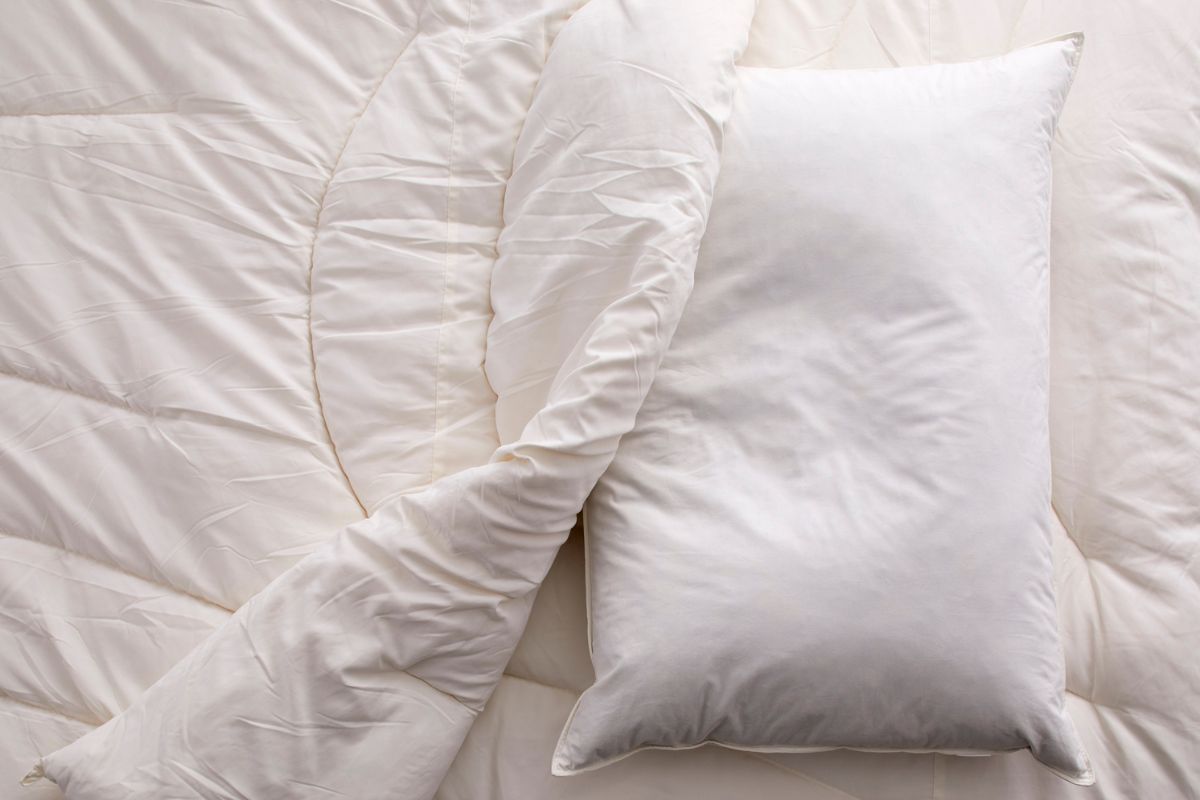
In many cases, over time pillows can take on a yellowish tinge due to the build-up of moisture, hair grease, saliva or make-up residue.
Although pillowcases help to protect the pillow, if they aren’t washed regularly, some of that dirt can seep through the fabric and build up in the filling. That’s why the best way to prevent these stains from appearing is to wash pillowcases and pillow protectors regularly and ensure your bedroom is well ventilated.
If the pillow has already turned yellowish, you can follow this process:
- Always check the manufacturer’s label to see if it is machine washable or must be washed by hand.
- If the pillows can be machine washed, use a delicate cycle with cold or lukewarm water and a little mild detergent. Avoid using aggressive cycles or high temperatures so as not to distort the filling.
- If you need to wash them by hand, use a slightly damp cloth and mild soap, cleaning only the stained areas without soaking the pillow. Rinse out any remaining soap thoroughly.
- In either case, allow the pillow to dry completely in a well-ventilated area before using it again.
To help reduce yellowing, you can add a little bicarbonate of soda during the wash, as this helps loosen dirt and slightly lighten stains. For more stubborn stains, you can use specific bleaching products for white laundry, such as sodium percarbonate, always ensuring that the pillow’s material is suitable for their use.
How often should pillows be washed?
It is also important to consider how often pillows should be washed, although the exact frequency will depend on the material, how often they are used, and whether protective covers are used.
As a general rule, it is recommended that pillows be washed every 3 to 6 months to maintain proper hygiene and prevent the build-up of dirt. Pillowcases, on the other hand, should be washed more frequently, ideally once a week.
For people with respiratory allergies, it may be advisable to wash pillows more frequently to prevent the build-up of dust mites, which can exacerbate symptoms. Furthermore, airing pillows regularly helps keep them in better condition between washes.
Tips for keeping your pillows in good condition
To finish, here are some practical tips for looking after your pillows on a daily basis and keeping them in the best possible condition:
- Always use a washable protective cover: this acts as a barrier against moisture, dust and other contaminants, significantly reducing the amount of dirt that reaches the filling.
- Wash the covers once a week: this will prevent the build-up of dust mites and maintain a more hygienic sleeping environment, which is particularly important for people with respiratory allergies.
- Air your pillows frequently: letting them breathe for a few hours helps remove moisture accumulated during the night and reduces the build-up of unpleasant odours.
- Keep your bedroom dry: a damp environment encourages the growth of dust mites and damages the filling materials.
- Always follow the manufacturer’s instructions: each type of pillow (memory foam, latex, down or fibre) requires specific care to prevent damage to the materials during washing.