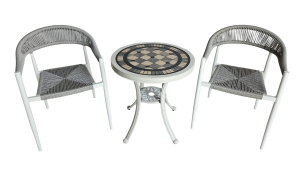
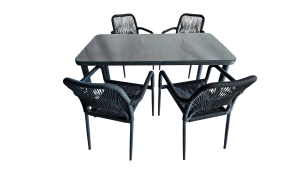
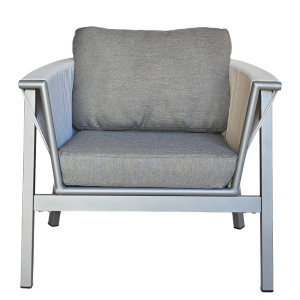
Textilene is a material widely used in outdoor furniture thanks to its resistance to moisture, its quick-drying properties and its ease of maintenance. These qualities make it suitable for use in gardens, terraces and pool areas, where materials are constantly exposed to the sun, water and dirt.
It is commonly found in textilene sun loungers, chairs and armchairs, as it provides a flexible, breathable and comfortable surface even without cushions. In many cases, it is combined with aluminium for the furniture frame.
In this article, we explain what textilene is, its advantages and limitations, its most common uses and how it differs from other materials designed for outdoor spaces.
Textilene – commonly referred to as textilene in the outdoor furniture sector – is a technical fabric made up of polyester yarns coated with polyvinyl chloride (PVC).
The polyester forms the core and provides tensile strength, whilst the PVC coating protects the fibres from moisture, wear and tear, and environmental exposure. Furthermore, the polyester yarns are interwoven to create a mesh with small openings that allow air to pass through and water to drain away.
This structure results in a firm yet slightly flexible surface, perfect for use on the seat and backrest of a chair or sun lounger. It is a lightweight, durable, breathable fabric that does not absorb water, meaning it dries quickly.
It is worth noting that Textilene® is, originally, a registered trademark, although today the term is also used generally to refer to this type of technical fabric designed for outdoor use.
Although there is no universal classification, textilene can be categorised commercially according to its finish and the way the threads are woven. For garden furniture, the following main variants are available:
The use of Textilene in garden, patio and poolside furniture is due to a combination of features that are particularly well-suited to spaces exposed to the elements. Among its main advantages, the following stand out:

Although textilene offers good performance for outdoor use, its performance depends on the quality of the fabric, the construction of the furniture and how well it is maintained. Before choosing it, it is worth considering a few limitations:
Given its ability to remain taut and withstand frequent use, textilene is frequently used for seat and backrest surfaces, and can be combined with aluminium, steel, rattan or wooden frames. Some varieties are also used in features designed to provide shade and sun protection.
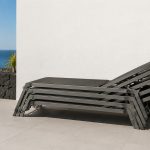
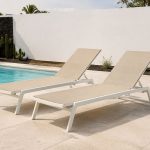
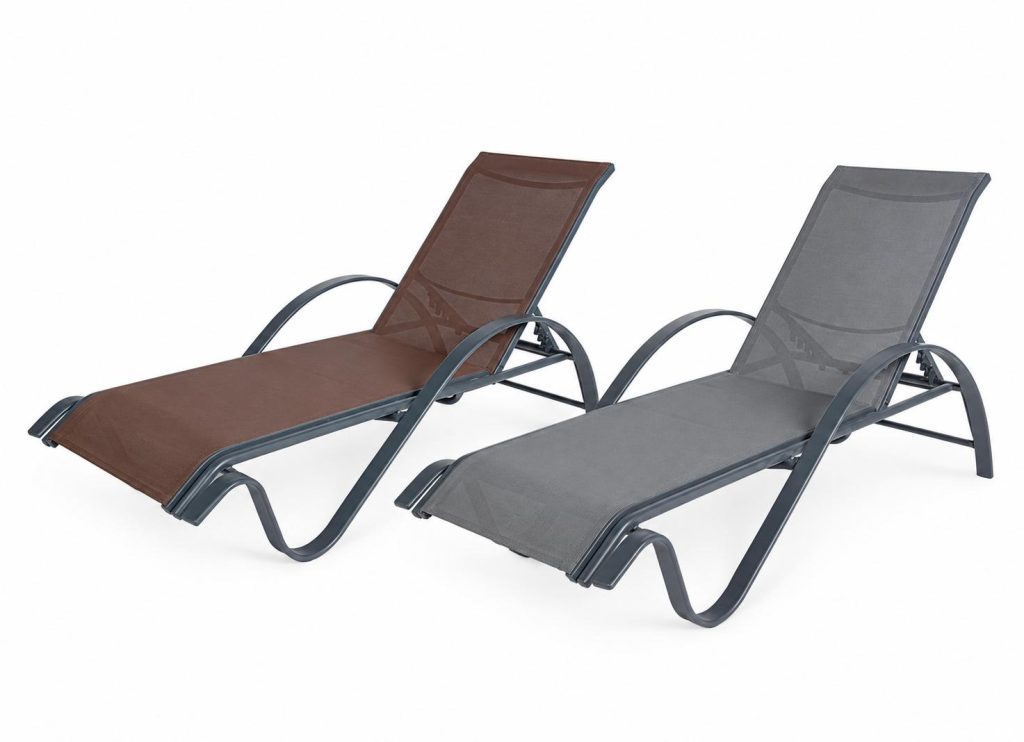
This is one of the most common uses, where the fabric forms a continuous surface that supports the body and moulds slightly to its posture. Its breathability and quick-drying properties make it particularly practical for use in gardens and by swimming pools.
Furthermore, it allows for the production of reclining, stackable or wheeled models without adding too much weight to the overall design.

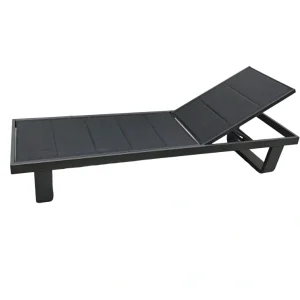
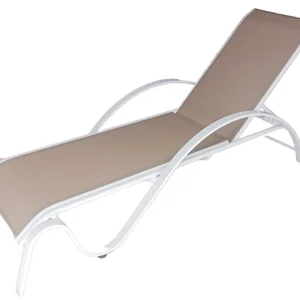
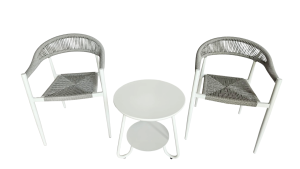
In textilene garden chairs, the fabric can be used on both the seat and the backrest, providing flexible support without the need for cushions. It is commonly combined with aluminium or steel frames, creating lightweight pieces that can be moved easily as required.
Certain types of textilene are also used in awnings, sunshades and parasols due to their resistance to UV rays and water. The mesh structure filters out some of the radiation and allows air to circulate, reducing the feeling of stuffiness in the shade on the hottest days.
In hotels, restaurants, holiday apartments and holiday resorts, high-density textilene is a very common choice due to its durability under intensive use.
Its quick-drying properties, ease of cleaning and the ability to manufacture stackable furniture facilitate daily maintenance, the reorganisation of terraces and the management of outdoor spaces with a high turnover of users.
Before choosing outdoor furniture made from textilene, it is worth understanding how it differs from other materials commonly used in garden furniture. Although many of these materials share similar applications, they differ in terms of feel, breathability, drying time, maintenance and resistance to outdoor exposure.
It is worth noting that textilene contains polyester, but its fibres are coated in PVC, making the material much more resistant to water and sunlight. In contrast, conventional polyester is typically used in covers, cushions or upholstery, which often require protective treatments to withstand outdoor conditions effectively.
Both Textilene and Phifertex are trade marks for technical fabrics which, in many cases, may share the same composition. Both consist of meshes made from PVC-coated polyester, so the actual differences lie in each specific range, including weight per square metre, finishes, certifications and the manufacturer’s guarantee.
Acrylic or olefin fabrics tend to feel more like a traditional fabric and are mainly used for cushions, covers and upholstery. They do not have such a firm and stable structure; they are also less water-resistant and require more maintenance.
Synthetic rattan is a rigid fibre that mimics natural wicker and comes in strips woven around a frame, whilst textilene forms a taut mesh. The former has a more voluminous and decorative appearance, but is usually complemented by cushions; textilene, on the other hand, is lighter, more breathable and dries quickly.

The variety of colours and finishes available means that textilene outdoor furniture can be incorporated into a wide range of outdoor styles. To create a balanced look, it is advisable to take into account the structure of the furniture, the other materials in the garden and the colour scheme of the space.
Although it is not considered waterproof in the strict sense, the PVC coating has very low water absorption. Furthermore, the mesh structure allows water to pass through the fabric rather than pooling on its surface. For this reason, the furniture dries fairly quickly after getting wet, without retaining moisture or developing unpleasant odours.
Textilene incorporates an anti-UV treatment that significantly delays fading compared to other outdoor fabrics. Even so, after years of intense and continuous exposure to the sun, as is the case in very sunny climates, it is normal for the colour to lose some of its intensity over time, although this happens much more slowly than with unprotected fabrics.
For regular cleaning, the first step is to remove any dust and clean the mesh with lukewarm water, mild soap and a sponge. Then, rinse the fabric and leave it to air dry. For stubborn stains, you can use a soft-bristled brush, rubbing gently and avoiding scourers or abrasive products.
Yes, textilene is designed to be left outdoors and to withstand normal exposure to the sun and moisture. However, covering or storing the furniture for long periods when not in use will help to preserve it. In coastal areas or near swimming pools, it is also advisable to periodically remove any traces of salt and chlorine.
With normal use and basic care, textilene can last for several years, or even more than a decade in the case of high-quality, heavyweight fabrics. Its lifespan depends on the quality, frequency of use, exposure to the sun, maintenance and whether it is protected during the quieter months.
It depends on the intended use and your personal preferences. Standard textilene is lighter, more breathable and dries quickly, so it works particularly well near swimming pools and in very hot climates. Padded textilene incorporates a filling that provides a softer surface, ideal for long periods of relaxation, although it dries slightly more slowly.